Our polymer encapsulated lines are engineered to ensure the long-term mechanical and chemical integrity of critical control conduits in the most demanding environments.
By extruding a robust, high-performance thermoplastic sheath over single or multiple metallic tubes (such as 316L or Nickel Alloys), we provide a comprehensive solution that bridges the gap between high-pressure performance and external environmental resilience.
Whether for deepwater or high-deviation wellbores, these encapsulated lines act as a definitive barrier against the rigors of modern energy production.
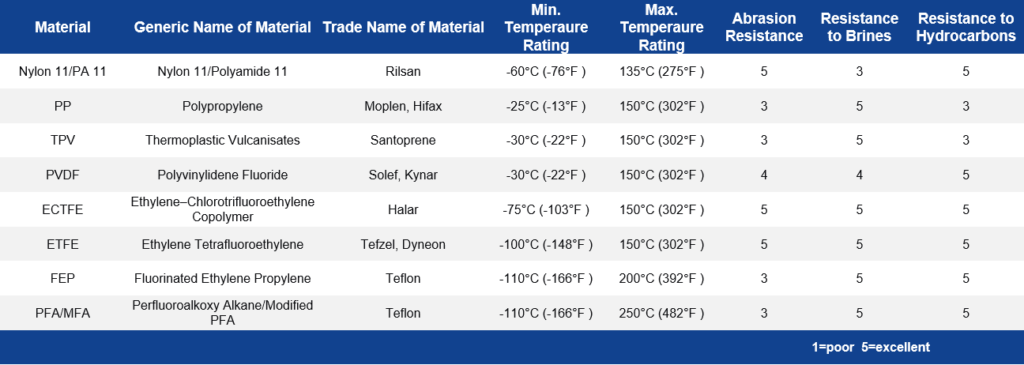
The following table summarizes our standard encapsulation materials and their respective application environments:
Encapsulation Profiles
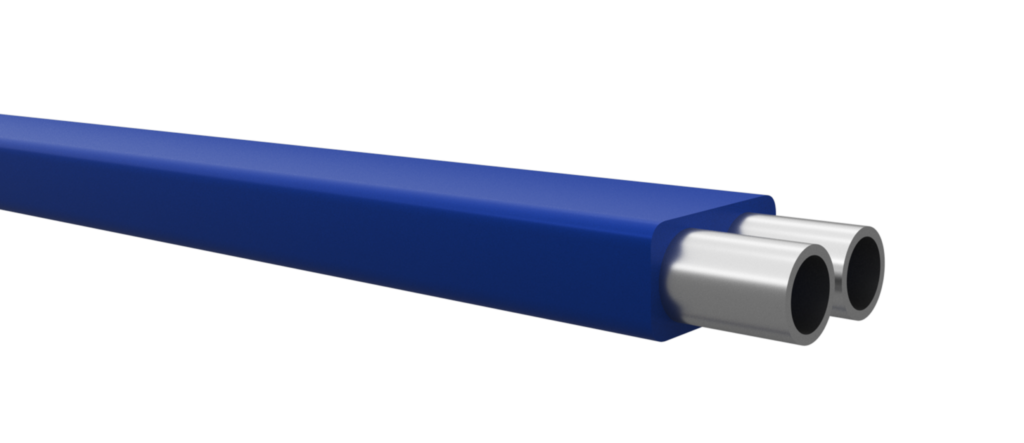
To accommodate diverse downhole spatial constraints and operational requirements, our encapsulation is available in both Round and Square/Flat cross-sectional geometries.
Round profile
Ideal for conventional single-line protection
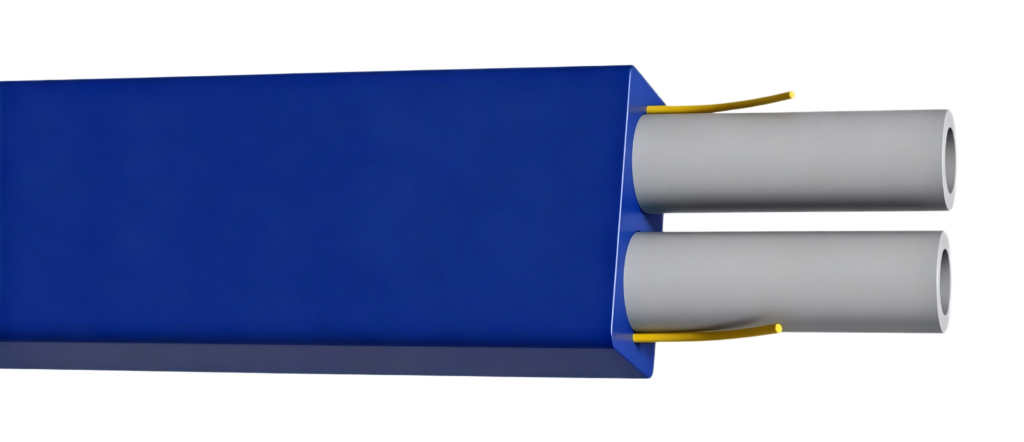
Square (flat-pack) configuration
Specifically engineered to integrate multiple conduits, optimizing annular clearance and enhancing stability within cross-coupling protectors.
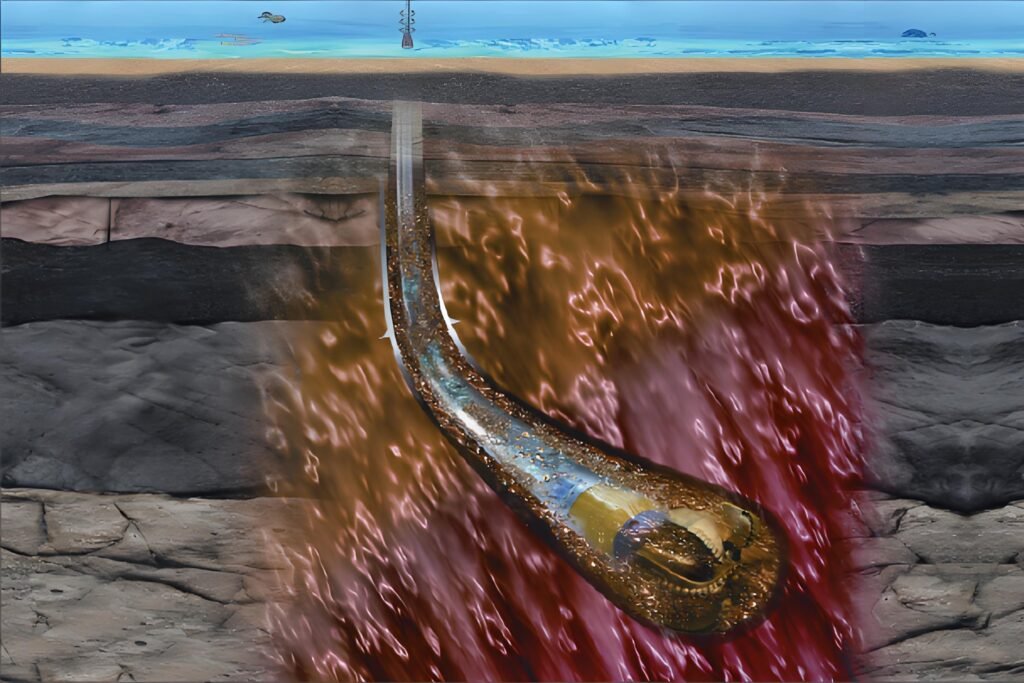
Downhole & Subsea
Essential for hydraulic control, chemical injection, and fiber optic sensing in high-pressure wellbores and subsea tie-backs.
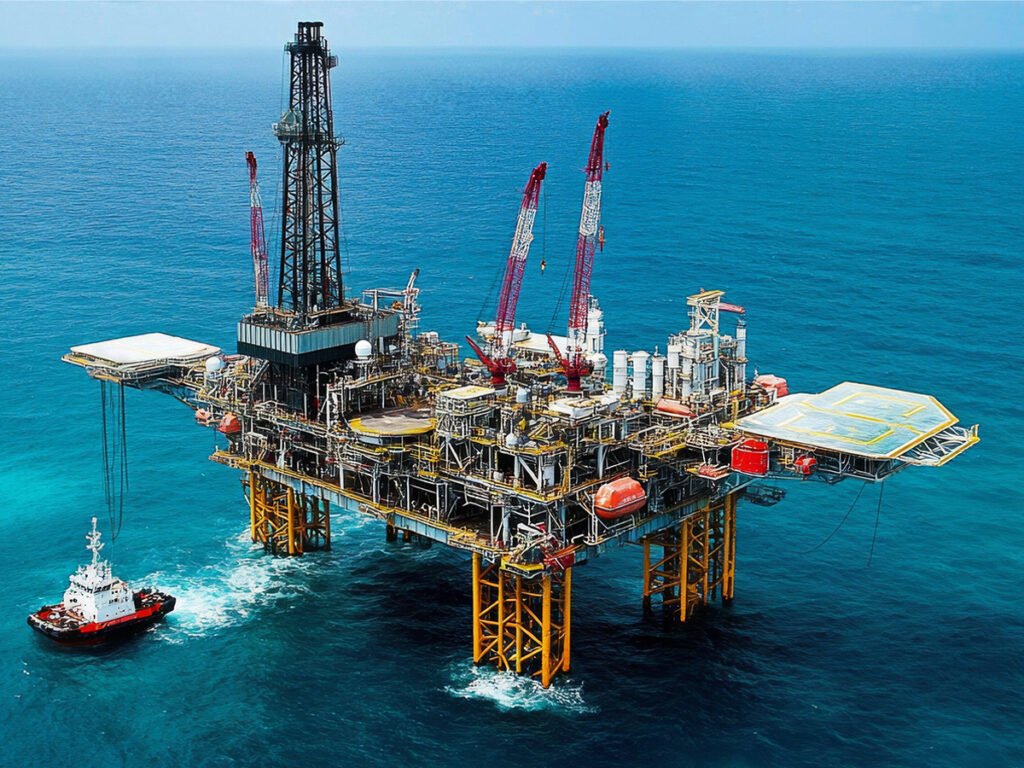
Offshore Umbilicals
Serving as core functional components for long-distance power and fluid delivery between platforms and subsea hardware.
Marine & Shipbuilding
Corrosion-shielded instrumentation and hydraulic control lines for deck machinery, engine rooms, and salt-spray exposed systems.
Intervention Systems
Reliable reeled lines for temporary workover operations and subsea well maintenance.
Mechanical Fortification
Acts as a sacrificial shield to absorb high-magnitude abrasions, crushing, and impact loads during deployment in deviated wellbores or complex shipboard routing.
Environmental & Chemical Isolation
Provides a continuous, leak-proof barrier that isolates the metallic substrate from corrosive wellbore fluids, completion brines, and harsh marine salt spray.
Galvanic Protection
Serves as a dielectric insulator to eliminate galvanic corrosion cells between the alloy tubing and dissimilar metallic structures (such as clamps, bulkheads, or trays).
Operational Streamlining
Consolidates multiple hydraulic, electrical, and sensing lines into a single “Flat Pack” or bundle, significantly reducing handling time and optimizing installation space.
Vibration & Fatigue Mitigation
The thermoplastic matrix secures the internal lines, dampening flow-induced vibrations and preventing mechanical fatigue failure during long-term production.
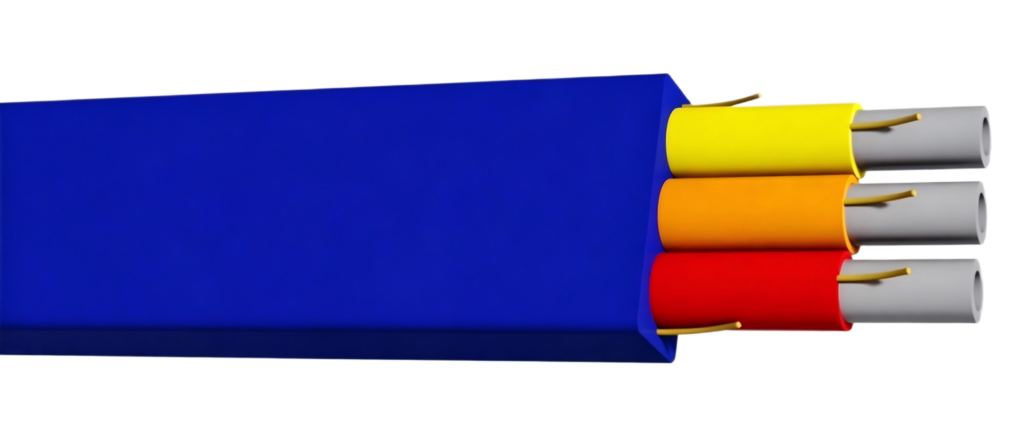
Color Coding
Rapid Circuit Identification
Available in different colors, our encapsulated jackets allow for instant visual differentiation between hydraulic, chemical, and sensing lines. This eliminates routing errors in complex subsea manifolds or shipboard cable trays, significantly enhancing operational safety and reducing troubleshooting time during commissioning.
Integrated Ripcord
Tool-Free Quick-Strip Technology
Our advanced longitudinal ripcord allows field personnel to shear the robust polymer jacket with ease, eliminating the need for manual cutting tools. This “quick-strip” technology effectively prevents accidental surface scoring or mechanical nicks on the internal metallic tubes, ensuring the long-term integrity of the bare tubing while drastically lowering rig-floor assembly costs.
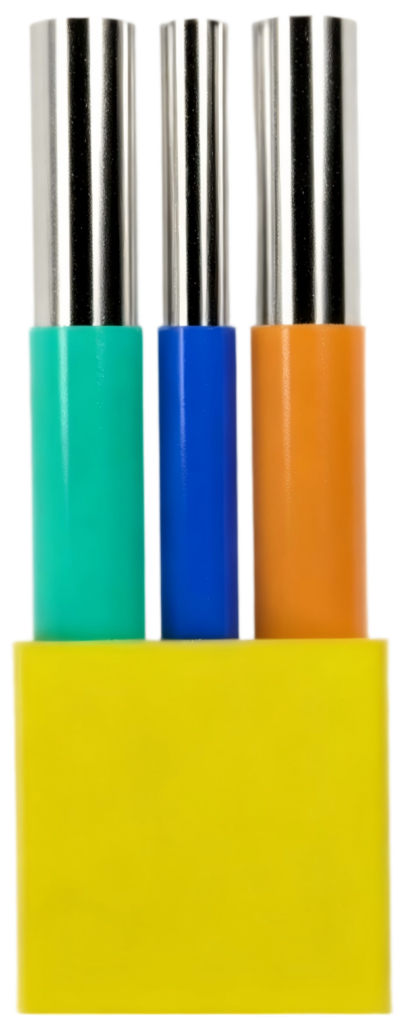
Multi-Core Bundling
Custom Flat Pack Configurations
We offer bespoke “Flat Pack” designs that integrate multiple tube sizes and types (including electrical or fiber optic cables) within a single, high-strength polymer profile. This streamlined configuration optimizes the footprint in tight installation spaces and simplifies the deployment process by reducing the number of individual clamps and protectors required.
Concentricity & Diameter Control
Continuous laser monitoring of extrusion thickness to ensure uniform protection and precise OD tolerance.
Surface Finish Inspection
Visual and tactile verification of the polymer jacket to ensure a defect-free, smooth surface for optimal deployment.
Adhesion & Holiday Testing
Verification of the bond between the metal substrate and polymer to prevent delamination in high-temperature service.


_工作區域-1-複本-15.png)