_工作區域-1-複本-15.png)
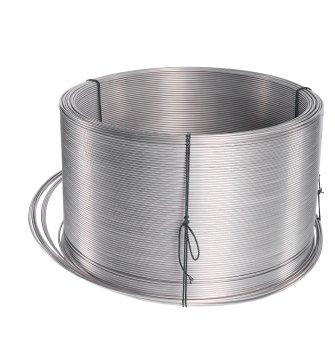
Capillary Tubing
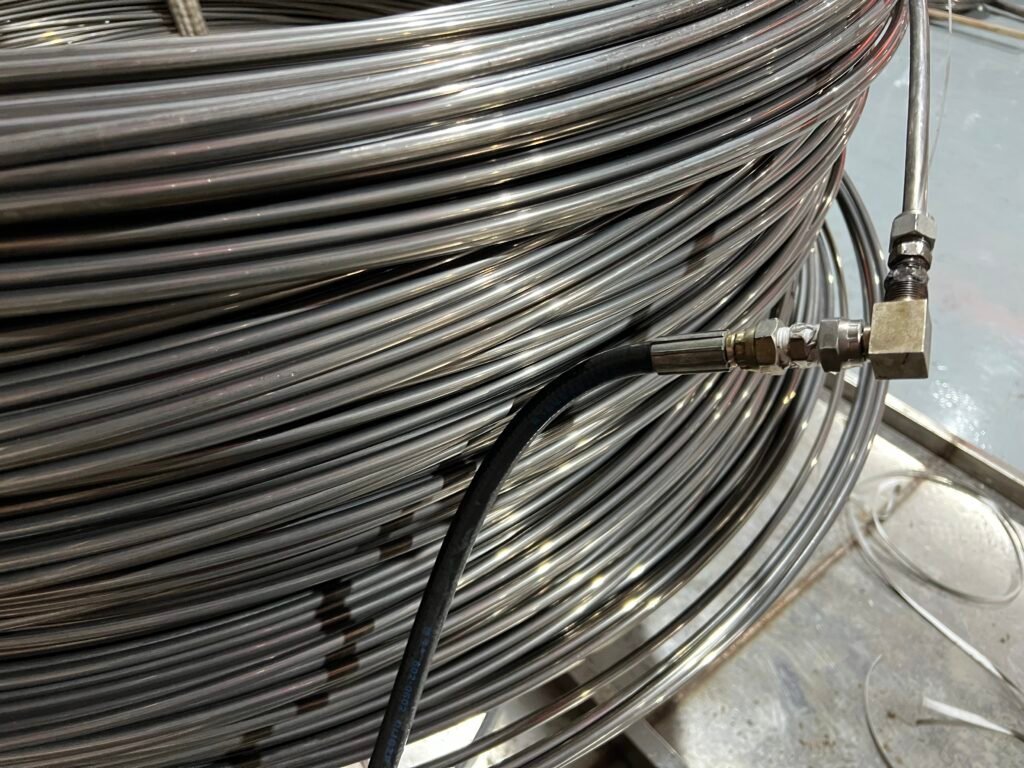
T-Tech offers different material welded and seamless capillary tubing, depending upon the properties the tubing is required to exhibit.
Stainless steels exhibit excellent forming and welding characteristics, while duplex stainless steels has greater yield strength than austenitic stainless steel. Nickel alloys have high corrosion resistance and temperature strength, while super-austenitic alloys were designed to resist crevice corrosion, pitting, chloride-induced corrosion, and stress corrosion cracking.
Size Ranges
- Outer Diameter: 1/8″~5/8″
- Wall Thickness: 0.02″~0.083″
- Continuous Length: As required
Standard Size
- 1/4” x 0.035”, 0.049” & 0.065”
- 3/8” x 0.035”, 0.049” & 0.065”
- 1/2” x 0.049”, 0.065” & 0.083”
- 5/8” x 0.049”, 0.065” & 0.083”
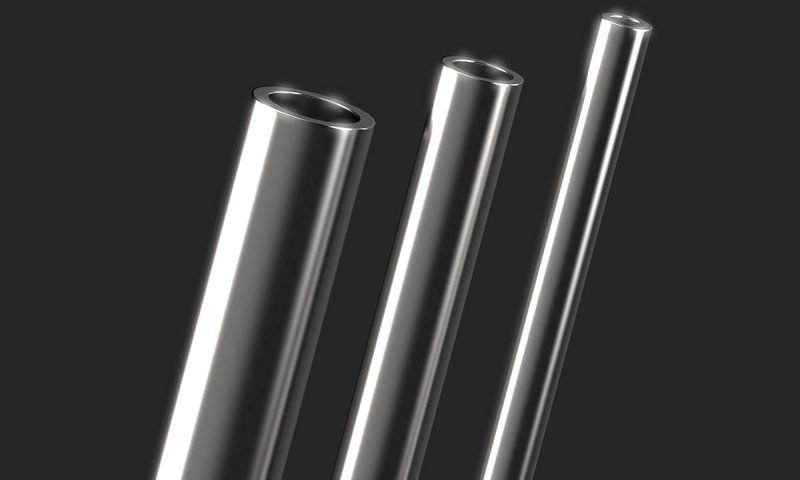
Commonly Used Materials
- 316L Stainless Steel
- Duplex 2205
- Super Duplex 2507
- Alloy 825
- Alloy 825 Enhanced Properties
- Alloy 625
| Materials | Microstructure | Pitting Resistance (PREN) | SCC Resistance (Chloride/Sour) | Service Environment Capability | Recommended Application |
|---|---|---|---|---|---|
|
SS316L
|
Austenitic |
22.6 – 27.9 |
Limited |
Low Cl⁻/ Sweet Service (<60°C) |
Control lines for utility systems
|
|
Duplex 2205
|
Ferritic-Austenitic
|
34.1 – 37.7
|
High
|
High Cl⁻ / Mild Sour Service
|
Chemical injection & standard production
|
|
Super Duplex 2507
|
Ferritic-Austenitic
|
37.7 – 47.6
|
Excellent
|
Harsh Cl⁻ / Moderate Sour Service
|
Deepwater umbilicals & subsea trees
|
|
Alloy 825
|
Nickel-Iron-Base
|
27.8 – 35.1
|
Superior
|
High CO2 + H2S / Acid Injection
|
Downhole casing & sour gas wells
|
|
Alloy 625
|
Nickel-Base
|
46.4 – 56
|
Immune
|
Extreme HPHT / Severe Sour Service
|
Ultra-deep sour gas wells & permanent downhole monitoring systems
|
Manufacturing Methods
As-Welded
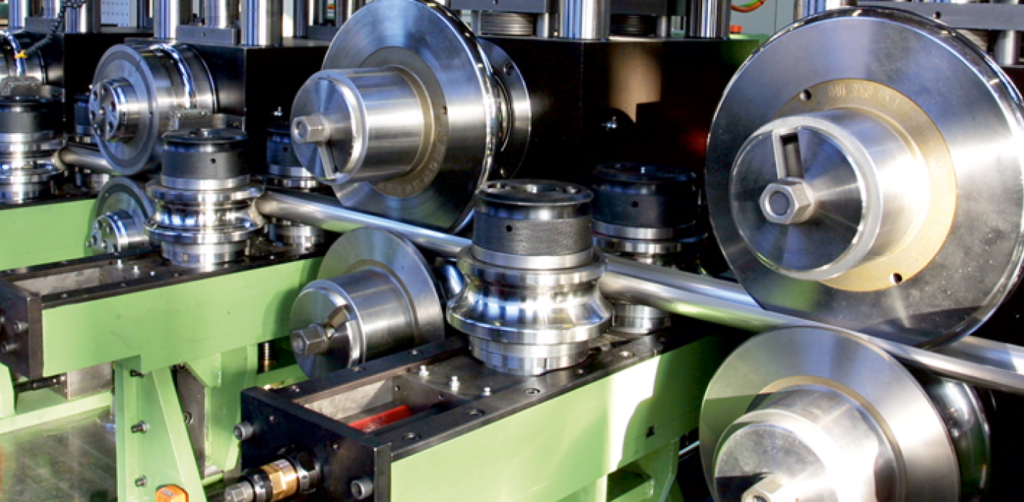
A flat strip is formed into a round shape through a series of rollers and then longitudinally welded. This is the most economical method, featuring a visible weld seam with standard dimensional accuracy and surface finish, suitable for non-critical general applications.
Welded & Drawn
After welding, the entire tube is cold-drawn through a reduction die. This process externally reworks and homogenizes the weld seam, making it nearly invisible. It significantly improves dimensional consistency, external surface finish, and provides a superior sealing surface.
Welded & Floating Plug Drawn
The welded tube is drawn through an external die with a floating plug inside the bore. This advanced method simultaneously reworks the weld seam internally and externally, achieving a smooth bore with excellent surface finish. It delivers the highest dimensional accuracy and sealing performance among welded tubes.
Seamless
A solid billet of metal is pierced and extruded or drawn into a tube with no longitudinal weld seam. The absence of a weld seam provides superior structural integrity and uniformity, making it the gold standard for high-pressure, extreme-temperature, and high-purity applications. However, as the continuous length of a single tube is limited, orbital welding is typically used to join multiple sections to achieve the required lengths.
Downhole Hydraulic Control Lines
Remote operation of subsurface safety valves (SCSSVs) and hydraulic completion tools. These lines provide the high-pressure link necessary for fail-safe well control and fluid management in deep-well environments.
Downhole Chemical Injection Lines
Precision delivery of inhibitors (scale, wax, or corrosion) to the production zone. Essential for maintaining flow assurance and protecting wellbore equipment from aggressive chemical degradation.
Subsea Control & Injection Lines
Subsea production systems and deepwater manifolds. Designed to withstand high external hydrostatic pressure while providing reliable hydraulic power and chemical injection for subsea trees.
Smoothbore Fiber Optic Control Lines
Deployment of DTS/DAS systems for real-time reservoir monitoring. The ultra-smooth inner diameter ensures the safe installation of delicate optical fibers in intelligent well completions.
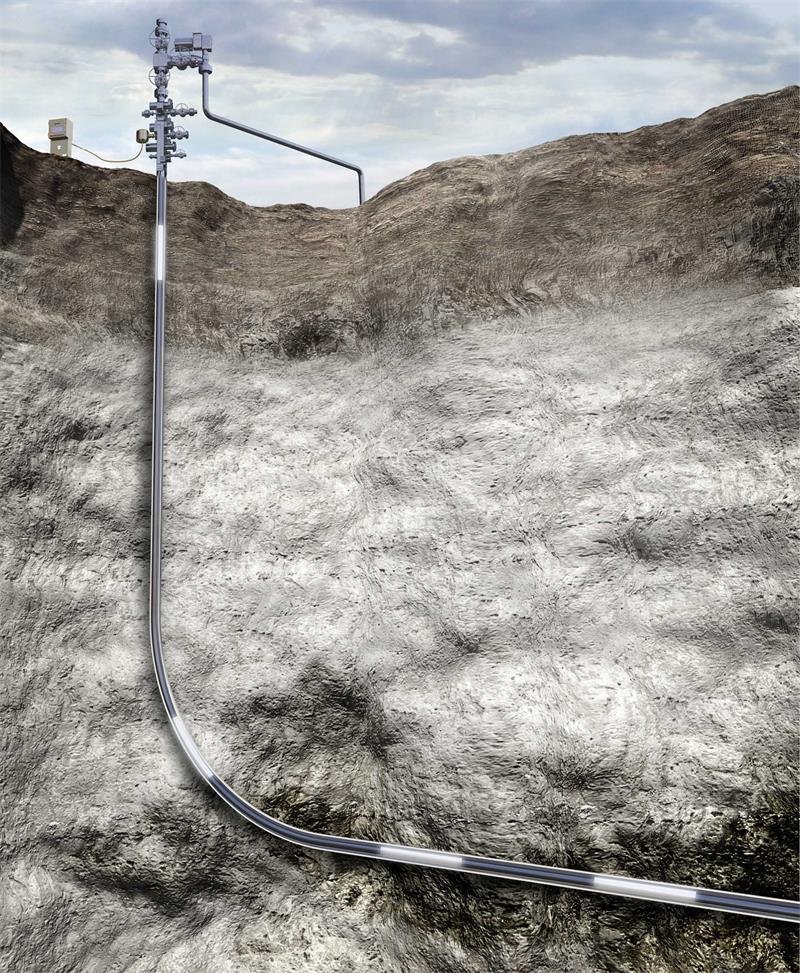
The capillary tubing is factory-filled with specialized compensation oil, hydraulic fluid, or inhibitors, then hermetically sealed at both ends.
Application Conditions:
Ideal for ultra-deepwater, high-pressure wells, and offshore operations requiring rapid deployment.
Filling Media:
Synthetic hydraulic fluids, control fluids, or custom chemical reagents, maintained at high cleanliness levels (e.g., NAS Class 6 or better).
Why Choose Pre-filled Capillary Tubing
1. Superior Collapse Resistance
Pre-filled fluid provides internal pressure compensation to prevent tubing collapse or ovality caused by external hydrostatic pressure in deepwater or high-pressure environments.
2. Operational Efficiency
Features “plug-and-play” capability, eliminating onsite flushing and filling to significantly reduce offshore rig time and associated costs.
3. Guaranteed Cleanliness & Integrity
Factory-controlled filling ensures NAS Class 6 or better cleanliness and a 100% air-free fluid column for precise, zero-delay signal transmission.
4. Internal Corrosion Protection
Filling at the point of manufacture seals out air and moisture, preventing internal oxidation and corrosion during transportation and storage.
To ensure the long-term mechanical integrity of downhole lines under extreme operating conditions, the control lines are typically encapsulated with high-performance polymers.
This encapsulation serves as a sacrificial barrier, effectively shielding the line from physical impairments such as abrasions, crushing, and deformation during deployment and production. Furthermore, it provides a continuous chemical seal that isolates the metallic substrate from corrosive wellbore fluids, thereby mitigating the risk of pitting and galvanic corrosion. Through this dual-protection mechanism, the likelihood of line failure is significantly reduced, ultimately maximizing the service life of the entire completion system.
Why Choose Polymer Encapsulated Capillary Tubing
1. Mechanical Fortification:
The robust polymer sheath (such as Nylon or PVDF) acts as a sacrificial layer, absorbing high-magnitude abrasions and impact loads during deployment in highly deviated or horizontal wellbores.
2. Operational Streamlining:
By integrating multiple hydraulic and electrical conduits into a single “Flat Pack” configuration, it significantly reduces rig floor handling time and optimizes the footprint of deployment equipment.
3. Galvanic & Chemical Isolation: The encapsulation provides a continuous dielectric barrier that eliminates galvanic corrosion cells between dissimilar metals and shields the alloy tubing from corrosive wellbore fluids and completion brines.
4. Vibration Dampening:
The thermoplastic matrix secures the internal lines, preventing fatigue failure caused by flow-induced vibrations or high-pressure pulsations during long-term production.
Eddy Current Testing
Eddy current testing (ECT) is conducted on longitudinally seam-welded tubing and strip splice welds at the intermediate size stage, in the as-heat-treated condition.
Hydrostatic Testing
Hydrostatic testing is performed on the final size of the tubing using water, unless the tubing is intended for service with oil, in which case oil shall be used as the test medium.
Pneumatic Testing
Pneumatic testing is preferred where residual moisture is unacceptable or in low-temperature environments, by using compressed gas—typically air or nitrogen—to verify the leak-tightness and pressure resistance.
Full-length Drift Testing
Full-length drift testing is available upon specific request to verify internal clearance and guarantee a seamless, risk-free cable installation for complex downhole environments.
INQUIRY INFORMATION
Please send us the essential information, then we will offer the pricing for you.